Monday, December 27, 2021

White pines turn golden in the fall

By Richard B. Primack 

“… a pine tree is as substantial and as memorable a fact as a friend. I am more sure to come away from it cheered than from those who come nearest to being my friends.” Henry David Thoreau in his Journal. 


For most of the year, white pine trees (Pinus strobus) are covered with lustrous evergreen needles.  Pine needles typically last three summers, and about one third of the needles, the oldest ones, will turn golden brown each autumn before dropping off.  The process of leaf senescence takes a few weeks and is generally not that noticeable. 


In the autumn of 2021, white pine trees in Newton and elsewhere in the Boston area had a really different look. As a result of a severe summer drought in 2020, pine trees showed reduced growth 2021 and produced relatively few new needles. And some of the needles produced in 2020 may have undergone senescence in 2021. As a result, more than half of the needles on many pines trees turned color in 2021 in October, giving the trees a dramatic and unusual patchy reddish golden look.  


A. White pine tree in Newton in October 2021 covered with old needles.

B. The same tree a few weeks later in early November after wind has swept away the old leaves.


The effect was prolonged due to several weeks of calm weather that allowed the dead needles to linger. A windstorm in early November finally swept away the old needles, and the pine trees returned to their normal green coloring. Bare spaces on thin twigs showed where the old needles had been. 


A. A branch of the pine tree covered with old needles.

B. A branch after the old needles have been swept away by wind.


Thursday, December 16, 2021

Climate Change in Urdu

By Richard B. Primack

“One studies books of science merely to learn the language of naturalists – to be able to communicate with them.” Henry David Thoreau in his  Journal. 

Voice of America recently broadcast an Urdu-dubbed interview with me  about the effects of climate change on autumn. The focus was on leaf color changes, and also included bird migration times and butterfly flight times.   This is a topic that our research group pioneered, led by the efforts of Amanda Gallinat.

Richard Primack is interviewed by Faiza Bukhari of Voice of America 

The focus of the interview is fall foliage 

The interview can be viewed here: link

Monday, November 22, 2021

Macrophenology: A new approach for investigating large-scale phenology patterns

Richard Primack

“The discoveries which we make abroad are special and particular – those which we make at home are general & significant. The further off the nearer the surface. The nearer home the deeper.”  Henry David Thoreau in his Journal

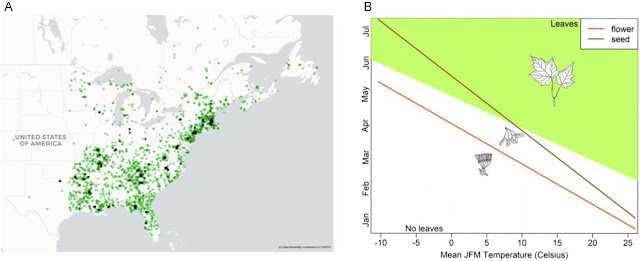
In a recent paper, we describe macrophenology as an exciting new field investigating large scale patterns of the timing of biological phenomena, such as flowering, leafing out, and bird migration. Macrophenology includes responses to a variety of drivers, including global climate change, across biomes, landuse types, and species' ranges.


Figure 1. The timing of flowering, fruiting and leafing out in red maples in response to temperature can be examined over all of eastern North America using herbarium specimens.


Macrophenology can provide exciting and novel insights due to theoretical and applied advances and emerging tools, such as the availability of digitized museum specimens and remote sensing data.  Four key areas of macrophenology have special opportunities: (1) global drivers of phenology, (2) species range limits (3) interactions and mismatches among species, and (4) ecosystem processes. 


Figure 2.  Core concepts of macrophenology and their linkages.

Macrophenology can also investigate historical biogeography, phylogenetic patterns and geographic gaps in phenology research. 

Title: Macrophenology: insights into the broadscale patterns, drivers, and consequences of phenology. 

Published in American Journal of Botany journal. 

Sunday, November 14, 2021

Noise in a Pandemic

By Alyssa Helmling 

Noise is inescapable in a large, bustling city like Boston, and it can be harmful to both wildlife and human health. The global COVID-19 pandemic altered the soundscape of cities as quarantine mandates led to dramatic decrease in human activity. We utilized this opportunity to study noise pollution before, during, and after the pandemic. 
 
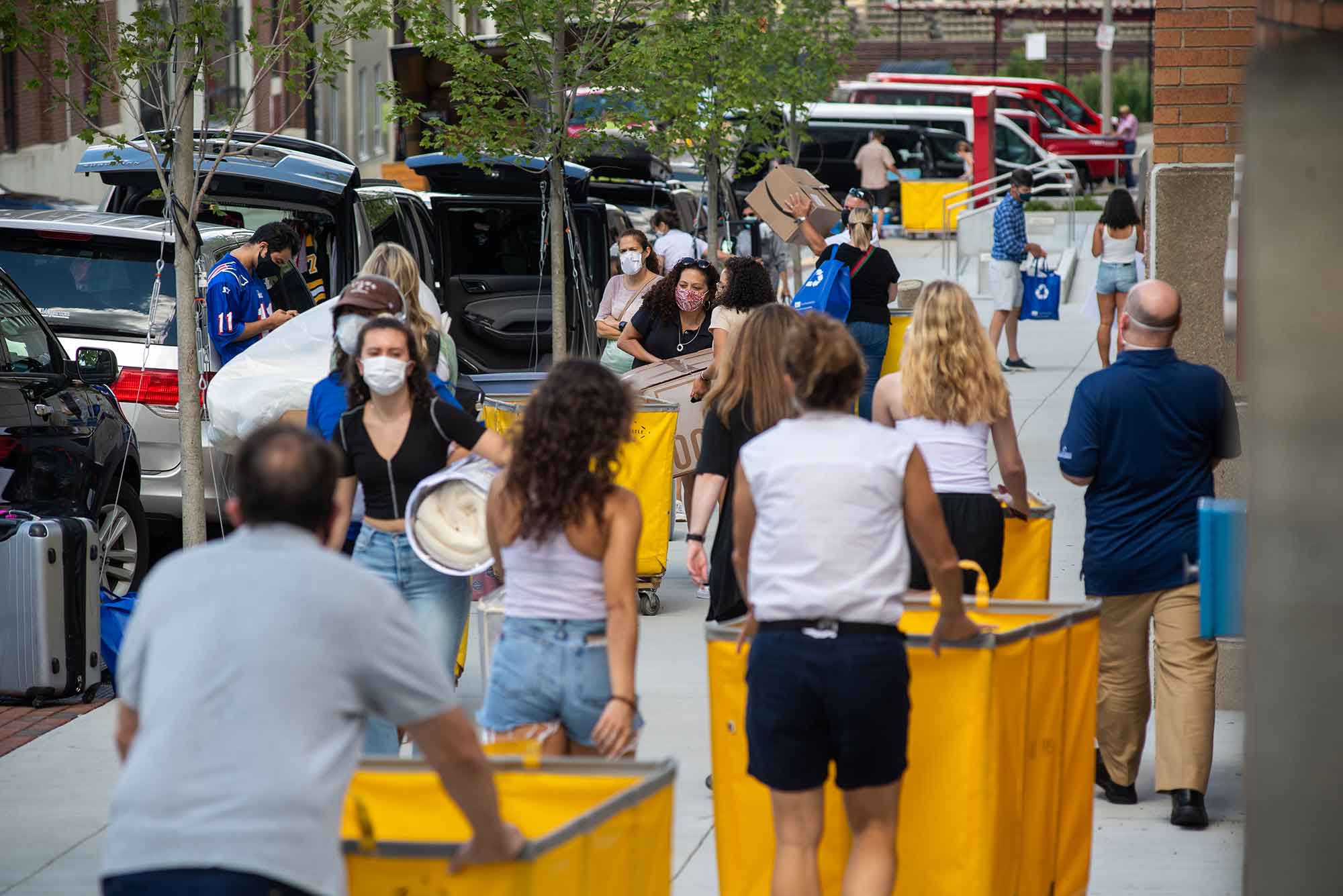
With a student population over thirty-two thousand, the Boston University campus is typically a noisy place which we measured before the pandemic using the SPLnFFT sound meter app with iPhones. During the 2020 academic school year many students chose not to return to campus and instead took classes from home, and our new set of measurements showed that BU was now quieter. 


BU campus comes back to life as students return for an in-person school year. Photo by Cydney Scott (link).


And now that many pandemic-related restrictions had been lifted in Boston in 2021, high sound levels have returned in many areas of the BU campus. Our research demonstrates how much cities might be able to reduce harmful, pervasive noise.

Tuesday, October 26, 2021

Wildflower monitoring at botanical gardens

By Richard B. Primack

“To him who contemplates a trait of natural beauty no harm nor disappointment can come.” Henry David Thoreau in Natural History of Massachusetts

The phenology of wildflowers has been comparatively neglected in climate change research.  While researchers have extensively investigated the flowering times of wildflowers, there is surprisingly little information on their times of leaf out, leaf senescence, and fruiting. 

Primack monitors flowering times of marsh marigold.

In a recent article published in Functional Ecology, researchers describe the PhenObs initiative for making standard phenology observations on 199 wildflower species at four botanical gardens in Germany. The goal is to develop a protocol which could then be widely applied to wildflowers, and be used in both functional ecology and climate change research. 

Just a single date of flowering time needs to be recorded for bloodroot, rather than more detailed flowering stages.

Researchers recorded information on the dates of 14 stages of phenology involving leaf out, leaf senescence, flowering and fruiting. Analysis showed that these stages were highly correlated, so gathering such detailed information was not needed. The final recommendation is that for monitoring large numbers of species the dates of just five stages should be monitored: three stages of vegetative growth (initial growth, leaves unfolding, and leaf senescence), flowers open, and ripe fruits. 
 
This paper was published as:
Nordt, B.... R.B. Primack et al., 2020. The PhenObs initiative — A standardised protocol for monitoring phenological responses to climate change using herbaceous plant species in botanical gardens. Functional Ecology 35: 821-834. 

Sunday, September 26, 2021

Museum Collections Predict Species Abundance in The Wild

By Richard B Primack


“Most men can keep a horse or a certain fashionable style of living, but few indeed can keep up great expectations.” Henry David Thoreau in his Journal.  


Museum collections of plants and critters—small mammals, fish, insects, amphibians, trees, and wildflowers—are a good reflection of most species’ relative abundance in the wild. To reach this conclusion, a scientific team analyzed 1.4 million field observations and 73,000 museum records of over 22,00 species.


Species being monitored in the field.


Using this approach, museum records can potentially be used to identify species that are declining over time and may need extra protection to prevent them from going extinct. As the pace of environmental change accelerates due to climate change and urbanization, the analysis of museum records will provide unique insights into how natural communities are changing in response.


Museum specimens of plants can be assessed for their relative abundance.


One factor that needs to be considered is that species that are rare in the wild are consistently over-represented in museums, whereas common species are under-represented in museums, because collectors tend to favor rare and unusual specimens and to pass over individuals of common species.


The possibilities for this avenue of research will be enhanced by the millions of museum specimens currently being digitized and made available on-line. 


Title: Estimating Species Relative Abundances from Museum Records

Published in Methods in Ecology and Evolution journal, 


DOI: 10.1111/2041-210X.13705


URL:  https://besjournals.onlinelibrary.wiley.com/doi/abs/10.1111/2041-210X.13705

Sunday, August 29, 2021

Pandemic lockdown highlights humans as both threats and custodians of biodiversity

 By Richard B. Primack


“There would be this advantage in travelling in your own country even in your own neighborhood, that you would be so thoroughly prepared to understand what you saw.” 

Henry David Thoreau in his Journal.

The global lockdown to mitigate COVID-19 pandemic health risks in 2020 altered human interactions with nature as described in a recent article. Hundreds of unusual species observations from around the world suggest that animals quickly responded to the reductions in human presence.

Figure 1: Wildlife reports from around the world describes changes in distribution and abundance during the pandemic.

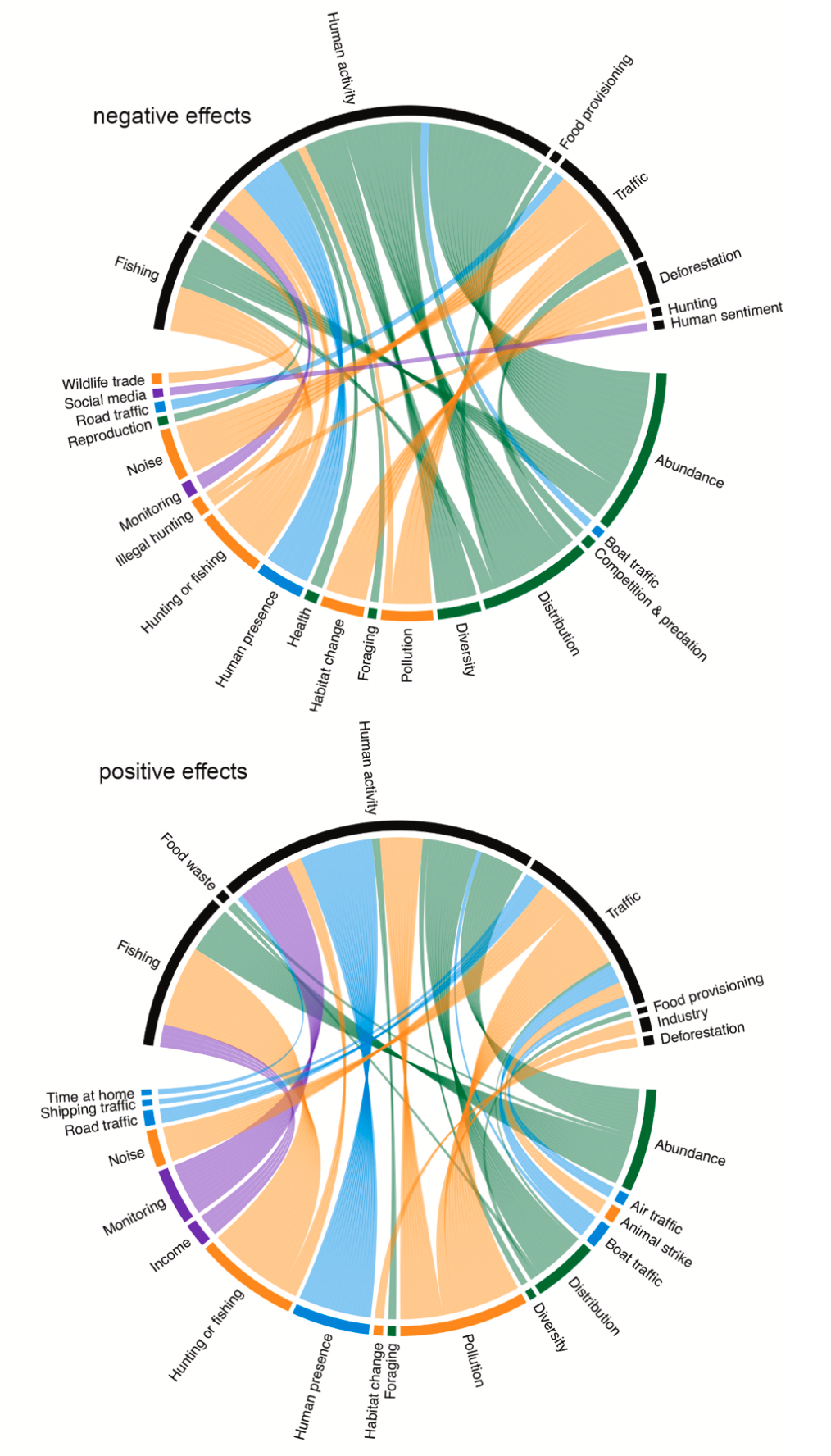
Overall, there is a complex mixture of positive and negative effects of the pandemic lockdown on wildlife and nature conservation. 

Figure 2: The pandemic lockdown had a mixture of positive and negative effects on nature.

This unplanned global quasi-experimental perturbation highlights the dual role that humans play in threatening and protecting species and ecosystems. Pathways to favorably tilt this delicate balance toward protecting biodiversity include reducing human impacts and increasing conservation effectiveness. 

The article appeared as: Bates, AE, Primack, RB, et al. 2021. Biological Conservation. 

https://doi.org/10.1016/j.biocon.2021.109175