Monday, February 22, 2021

Hammond Pond Parkway in Newton Reimagined

By Richard B. Primack
 
“Now I yearn for one of those old meandering dry uninhabited roads which lead away from towns… Where my spirit is free.” 
- Henry David Thoreau in his Journal.
 
Hammond Pond Parkway in Newton is a highspeed four-lane road with no sidewalks that bisects the Hammond/Webster Woods and is dangerous to cross. The Massachusetts Department of Conservation and Recreation has proposed a complete renovation involving reducing the current 4 lanes to 2, and creating a 12 foot wide landscaped pathway for pedestrians and bicyclists  on the western side of the parkway.  A new crosswalk would allow people to cross the parkway safely.

The parkway will be reduced from 4 to 2 lanes. A landscaped pedestrian and biking path will be built along the west side of the parkway.


Nicole Freedman, Newton’s Director of Transportation Planning, approves, “We are very supportive and excited for this project. It is taking a road that is overbuilt and unsafe and turning it into a gem.” 
 
Traffic studies by the DCR suggest that reducing the number of lanes will not affect traffic congestion, though speeds will likely be reduced.
 
Some local residents were concerned that these changes would create more congestion during rush hours and divert traffic into nearby neighborhoods.  Newton Councilor Lisle Baker urged the department to, “try out some things before building and find out it doesn’t work.”

There are concerns that these changes might increase traffic congestion at the Beacon Street intersection.


This is a condensed version of an article that appeared in the Newton Tab.

Friday, February 12, 2021

Wildlife biologists grow up in suburban Newton

By Richard B. Primack


“Knowledge is to be acquired only by a corresponding experience.” 
Henry David Thoreau in A Week on the Concord and Merrimack Rivers.
 
Even in these days of the COVID-19 pandemic, people of all ages are out in Newton’s wild places observing birds, photographing natural beauty, removing invasive plants, and exploring the landscape of this populous suburb in metropolitan Boston. Who knows which ones will transform their passion into careers?
 
Sam Jaffe thinks Newton had the right mixture of lawns, wild places, and overgrown spots to engage his childhood passion for insects.  Today Jaffe directs The Caterpillar Lab in New Hampshire, which has five full-time employees and focuses on education, science and art involving caterpillars.


Sam Jaffe shows caterpillars at a public event.


Sabrina Hepburn remembers Nahanton Park along the Charles River as the place where she went birding with her family and saw American woodcocks.  Today, Hepburn is an environmental manager in Colorado specializing in how big energy projects impact wildlife.


Sabrina Hepburn views king penguins on a trip to the subantarctic.

 
Brendan Whittaker grew up on the edge of Webster Woods in Newton, exploring, camping out, and fishing in Hammond Pond. Whittaker went on to study forestry and became Secretary for Natural Resources for Vermont, responsible for forests, water, fish, and wildlife.


Brendan Whittaker cores a Vermont tree to determine its age.


Oliver and Nick Komar biked around Newton every day before and after school looking for birds.  Today, Nick is a disease ecologist with the Centers for Disease Control in Colorado, specializing in human diseases spread by birds. Oliver teaches and does research on wildlife conservation at Zamorano University in Honduras.


Oliver Komar holds a Spot-Crowned Woodcreeper in Honduras.

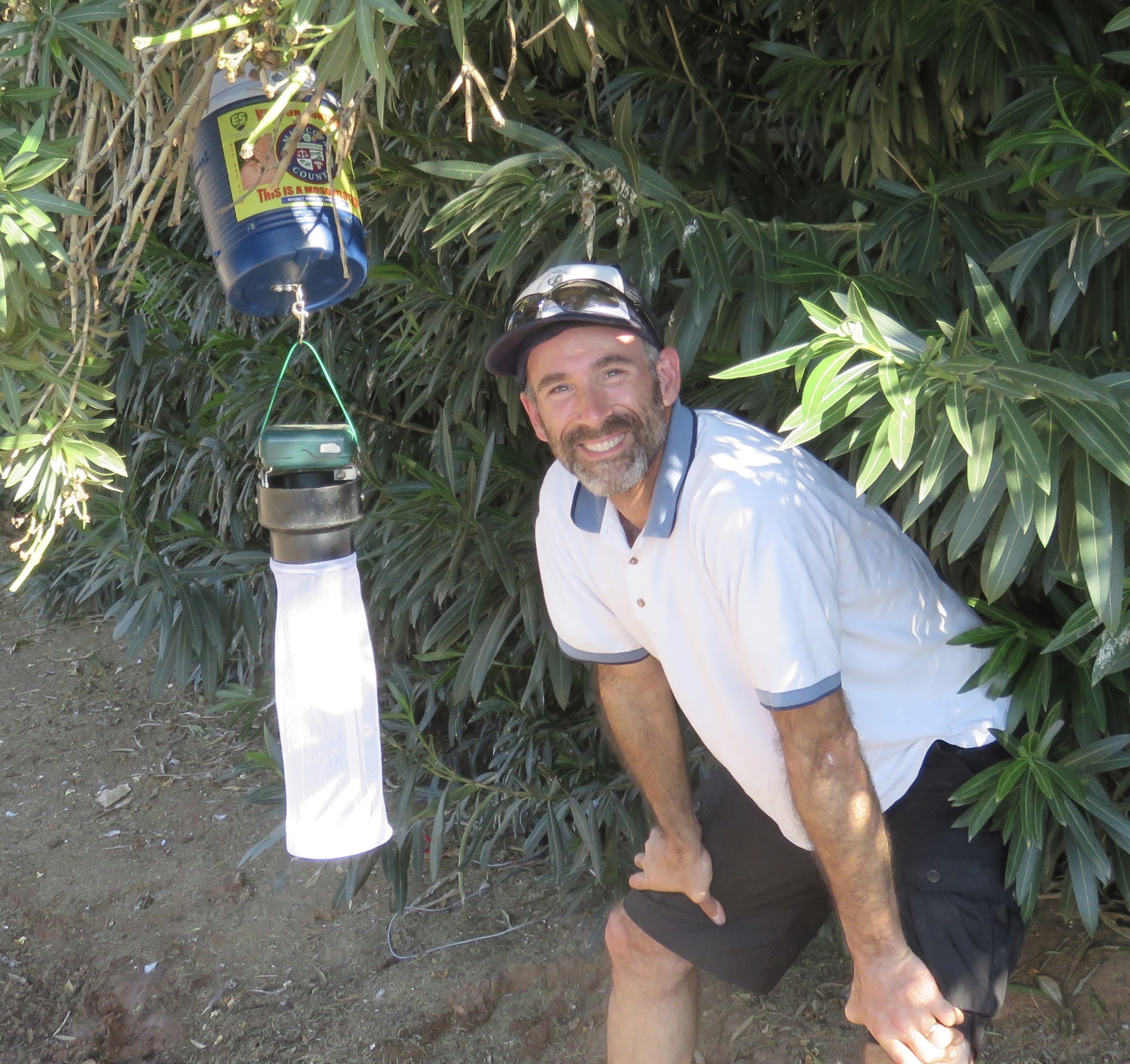
Nick Komar checks a mosquito trap in Arizona.


This article is a shortened version of an article that appeared in the Newton Tab.

Thursday, January 28, 2021

Hats Off to Biological Conservation

By Richard B. Primack
 
“The walker and naturalist does not wear a hat…to be looked at, but for other uses.”
 -Henry David Thoreau in his Journal.
 
After 17 years, I am stepping down as editor of the journal Biological Conservation.  I enjoyed my editing experiences, but I am also glad for the additional time for my own research.
 
The cover of Biological Conservation.

 
At the journal, we worked on many projects together and published numerous jointly authored papers, especially on the publication process.  It was wonderful being a part of an international community of conservation biologists.

Some of the editors on a field trip in Amsterdam.


During these years, we placed a special emphasis on trying to have a greater diversity of editors and authors, especially from under-represented countries.  I think we made some good progress.
 
The highlights of my time with the journal were producing special issues focusing on Japan, China, and India, and more recently on long-term tropical research and the conservation impacts of the COVD-19 lockdown.  Our special issue on environmental DNA was cutting edge at the time that it appeared. 

An Editorial about Primack leaving Biological Conservation can be found here.

Friday, January 22, 2021

Does the pandemic quiet the city?

By Alyssa Helmling


Due to lockdowns enforced by governments, human activity has been drastically altered across the globe, and perhaps made cities quieter.

Over the past several months, I have been working on a research project focused on noise pollution in Boston during the COVID-19 pandemic. My project aims to analyze differences in noise pollution from before, during, and after the COVID-19 pandemic in iconic urban centers in metropolitan Boston. Using iPhones, I have organized members of our lab to collect data across several different locations that typically experience high noise pollution from traffic, airplanes, or other sources of anthropogenic sound.

This research will test if cities are quieter during the pandemic. I hope my findings can add to the growing body of research on the effect of noise pollution on public health.  

BU campus is full of activity before the pandemic. Source

BU campus has fewer people during the pandemic. Source


Sunday, January 10, 2021

Newton wildlife livens up the pandemic

By Richard B. Primack

“How much more habitable a few birds make the fields! At the end of winter, when the fields are bare and there is nothing to relieve the monotony of the withered vegetation, our life seems reduced to its lowest terms. But let a bluebird come and warble over them, and what a change!” - Henry David Thoreau in his Journal

Is wildlife more abundant during this pandemic year in Newton, a suburb just west of Boston, because there is less human activity? Or are people noting wildlife more because they are working from home and spending more time outside? 

During the pandemic, Daniel Segrè has spent more time in Webster Woods pursuing nature photography. For two days, he observed a barred owl, at one point photographing it eating  a rabbit. 

Barred owl in the Webster Woods.  Photo courtesy of Dan Segrè.


Since the lockdown began in March, Max Chalfin-Jacobs, a Newton North senior, has observed 135 bird species in Cold Spring Park, about 30% of all the species known in Massachusetts. Most notably, he recorded a Kentucky warbler, normally found further south as well as red crossbills, pine siskins, and evening grosbeaks, all normally found farther north. 

Max Chalfin-Jacobs watching birds.  Photo courtesy of Ian Dickerman. 


Ted Kuklinski managed to film a great blue heron catching and trying to swallow a full-sized 3-foot-long female American eel on the muddy edge of Dolan Pond. Watch the video at: newtonconservators.org. How a migratory eel wound up in a small isolated vernal pond is a mystery, but it is an example of the adventures awaiting nature enthusiasts in the wilds of Newton.  

Great blue heron starting to eat an American eel. Photo courtesy of Ted Kuklinski.


This is a shortened version of an article that appeared in the Newton Tab

Monday, December 21, 2020

Sugar Poisons Leaves?

By Richard B. Primack

“In my experience I have found nothing so truly impoverishing as what is called wealth.” 
- Henry David Thoreau in his Journal

An innovative recent article in Science proposes that earlier leaf senescence of trees in autumn is promoted by summer condition of high light and warm temperature that favor high levels of photosynthesis.   According to this hypothesis, rapidly photosynthesizing leaves will accumulate sugar in their leaves and deplete nitrogen reserves,  promoting early leaf senescence. This early leaf senescence caused by high levels of summer photosynthesis will tend to cancel the later autumn leaf senescence caused by warmer autumn conditions associated with climate change.  

During sunny dry conditions in Boston, black birch leaves undergo leaf senescence in August. 


This study raises several key questions.  Is their “poison sugar hypothesis” a widely applicable result, or just another additional factor that contributes to variation in leaf senescence?  How can we be sure that their result is really due to high photosynthetic rate and not just due to the well-known effects of  summer drought stress? And finally, do their results apply to other species and other places?  

When their wetland habitats dry out during a drought, the leaves of coast pepperbush wilt and undergo early senescence.  
 

Here is a copy of their article from Science.

Christine Rollinson wrote a Perspective about this topic for Science.

Ula Chrobak reported on the story for Popular Science.

Thursday, December 10, 2020

Flood of concerns about Newton's Cheesecake Brook

By Richard B. Primack
 
“A storm is a new, and in some respects more active, life in nature.”
- Henry David Thoreau in his Journal.
 
After a heavy June thunderstorm, Cheesecake Brook on the northern edge of Newton flooded and nearly poured over its banks into the surrounding streets and neighborhoods. With a changing climate, such intense storm events will only get more frequent and flooding danger will get worse. 

Cheesecake Brook flooded during the June 28, 2020 thunderstorm.  
Photos courtesy of CRWA.
 
 
More than a century ago the brook was confined within a narrow stone-lined channel. This straight channel carries sand and other suspended debris directly into the Charles River, along with dissolved phosphorus and nitrogen from lawns and roads, harming water quality.
 
People sampling for aquatic invertebrates in Cheesecake Brook.

 
To address these problems, the Charles River Watershed Association (CRWA) is developing a plan for restoring the sloping banks and natural winding pattern of the brook to increase water retention capacity, reduce flooding, and allow nutrient absorption. The plan includes bioretention basins to trap sand and other debris from streets and outfalls. Large rocks placed in the brook will reduce water velocity and erosion and provide habitat for migratory fish and insect larvae.
 
This is just the first step in a long process of planning, design and fundraising before the project begins and the brook is restored.
 
This is a shorter version of an article that appeared in the Newton Tab.