![]() |
| Carina Terry and Richard Primack at Hall’s Pond Sanctuary in Brookline, MA. Measurements were done using an iPhone app. |
In Professor Richard Primack's Lab at Boston University, we study the effects of climate change on the timing of seasonal biological events and species diversity. By teaming up with Henry David Thoreau and other local naturalists, we investigate how climate change is affecting plants, insects and birds right here in the Boston area.
Friday, March 26, 2021
COVID-19 lockdown makes two Boston urban parks quieter, but another is noisier
Monday, March 1, 2021
Women and the Global South are strikingly under-represented as top authors
![]() |
| Diverse perspectives foster scientific innovation in ecology and conservation (© Bea Maas) |
![]() |
| Global distribution of top authors in ecology and conservation (© Maas et al., 2021, Cons.Lett.) |
Monday, February 22, 2021
Hammond Pond Parkway in Newton Reimagined
![]() |
| The parkway will be reduced from 4 to 2 lanes. A landscaped pedestrian and biking path will be built along the west side of the parkway. |
| There are concerns that these changes might increase traffic congestion at the Beacon Street intersection. |
Friday, February 12, 2021
Wildlife biologists grow up in suburban Newton
By Richard B. Primack
| Sam Jaffe shows caterpillars at a public event. |
Sabrina Hepburn remembers Nahanton Park along the Charles River as the place where she went birding with her family and saw American woodcocks. Today, Hepburn is an environmental manager in Colorado specializing in how big energy projects impact wildlife.
![]() |
| Sabrina Hepburn views king penguins on a trip to the subantarctic. |
Brendan Whittaker grew up on the edge of Webster Woods in Newton, exploring, camping out, and fishing in Hammond Pond. Whittaker went on to study forestry and became Secretary for Natural Resources for Vermont, responsible for forests, water, fish, and wildlife.
![]() |
| Brendan Whittaker cores a Vermont tree to determine its age. |
Oliver and Nick Komar biked around Newton every day before and after school looking for birds. Today, Nick is a disease ecologist with the Centers for Disease Control in Colorado, specializing in human diseases spread by birds. Oliver teaches and does research on wildlife conservation at Zamorano University in Honduras.

Oliver Komar holds a Spot-Crowned Woodcreeper in Honduras.
![]() |
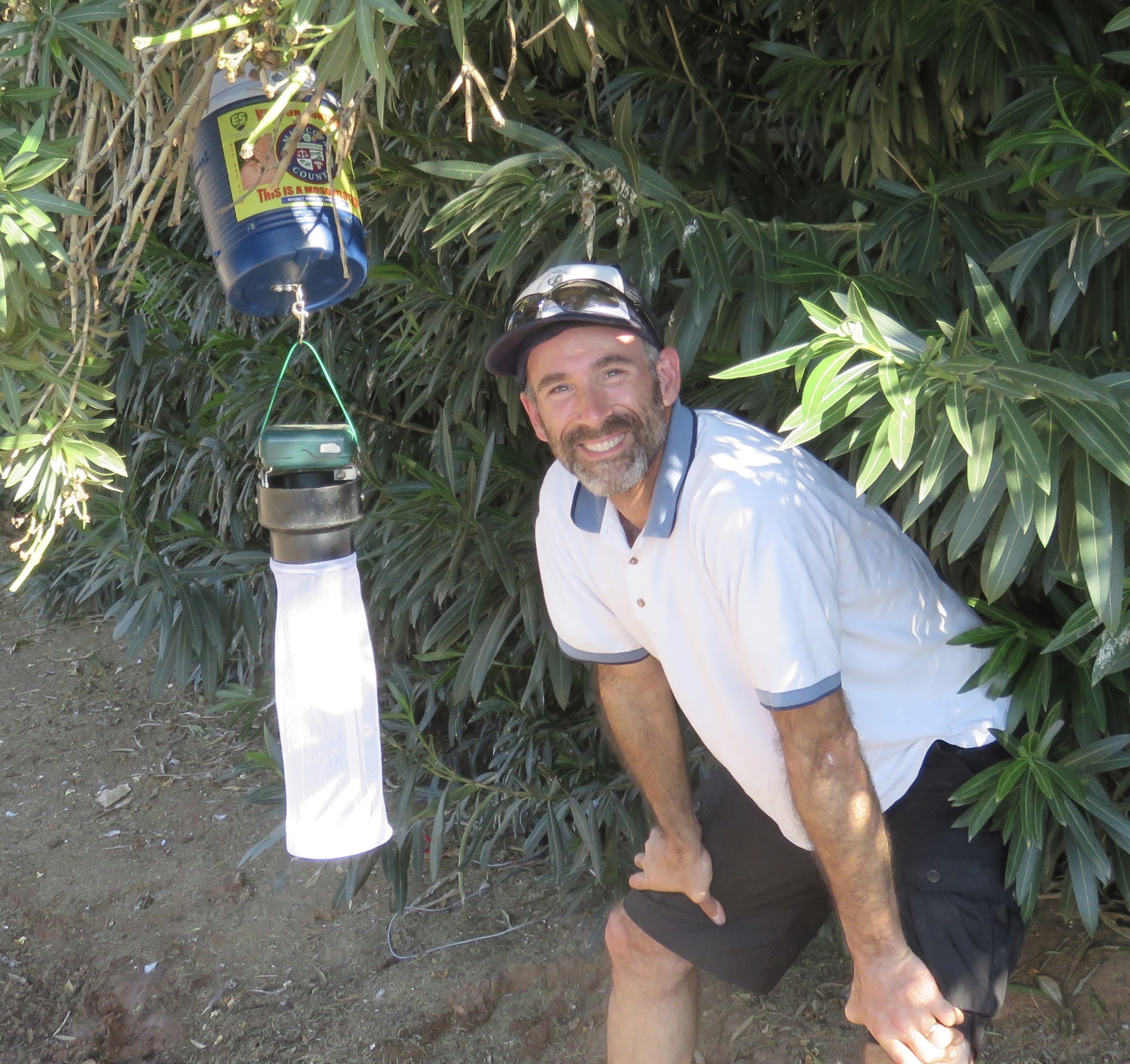
| Nick Komar checks a mosquito trap in Arizona. |
This article is a shortened version of an article that appeared in the Newton Tab.
Thursday, January 28, 2021
Hats Off to Biological Conservation
![]() |
| The cover of Biological Conservation. |
During these years, we placed a special emphasis on trying to have a greater diversity of editors and authors, especially from under-represented countries. I think we made some good progress.
Friday, January 22, 2021
Does the pandemic quiet the city?
By Alyssa Helmling
Due to lockdowns enforced by governments, human activity has been drastically altered across the globe, and perhaps made cities quieter.
Over the past several months, I have been working on a research project focused on noise pollution in Boston during the COVID-19 pandemic. My project aims to analyze differences in noise pollution from before, during, and after the COVID-19 pandemic in iconic urban centers in metropolitan Boston. Using iPhones, I have organized members of our lab to collect data across several different locations that typically experience high noise pollution from traffic, airplanes, or other sources of anthropogenic sound.
This research will test if cities are quieter during the pandemic. I hope my findings can add to the growing body of research on the effect of noise pollution on public health.
![]() |
| BU campus is full of activity before the pandemic. Source |
![]() |
| BU campus has fewer people during the pandemic. Source |
Sunday, January 10, 2021
Newton wildlife livens up the pandemic
Is wildlife more abundant during this pandemic year in Newton, a suburb just west of Boston, because there is less human activity? Or are people noting wildlife more because they are working from home and spending more time outside?
During the pandemic, Daniel Segrè has spent more time in Webster Woods pursuing nature photography. For two days, he observed a barred owl, at one point photographing it eating a rabbit.
Since the lockdown began in March, Max Chalfin-Jacobs, a Newton North senior, has observed 135 bird species in Cold Spring Park, about 30% of all the species known in Massachusetts. Most notably, he recorded a Kentucky warbler, normally found further south as well as red crossbills, pine siskins, and evening grosbeaks, all normally found farther north.
Ted Kuklinski managed to film a great blue heron catching and trying to swallow a full-sized 3-foot-long female American eel on the muddy edge of Dolan Pond. Watch the video at: newtonconservators.org. How a migratory eel wound up in a small isolated vernal pond is a mystery, but it is an example of the adventures awaiting nature enthusiasts in the wilds of Newton.
![]() |
| Great blue heron starting to eat an American eel. Photo courtesy of Ted Kuklinski. |
This is a shortened version of an article that appeared in the Newton Tab.