Monday, September 4, 2023

Rwanda Part 3: Birding at Nyungwe National Park

 By Richard B. Primack

The higher the mountain on which you stand, the less change in the prospect from year to year, from age to age. Above a certain height there is no change.” Henry David Thoreau in his Familiar Letters.

Nyungwe National Park has over 300 bird species, many of which are found nowhere else in the world. The richness of the bird fauna is apparently due to the Albertine Rift mountains retaining moist conditions even during drier past ice ages. Bird species were able to survive here over the past hundreds of thousands of years, when they could not elsewhere in Africa.

The main goal of our visit to the park was to see many target species sought after by serious twitchers who need to add new birds to their life lists. To accomplish this task, we hired the highly-regarded bird guide Claver Ntoyinkima. For three days, we traveled throughout the park in search of the target species, hiking the roads and trails and clambering along the canopy walkway. 

Figure 1.  Our birding group on the canopy walkway: Johnny “Birder” Wilson, Duan Biggs, myself, Abe Miller-Rushing, Claver, and Cagan Sekercioglu. 

Figure 2.  Johnny, Claver, and Duan with different birding tools. 

For Abe and me, the secondary goals were to watch the bird-watchers, observe the mountain forest, and evaluate novel aspects of park management. These include significant park entrance fees, requiring visitors to be accompanied by park rangers, the Rwandan government partnering with “African Parks” to manage the site, and numerous soldiers maintaining security due to the proximity to the border. 

Figure 3.  Claver calling in a target bird with a recording.


Figure 4.  Claver sighting a bird with binoculars.


Figure 5.  Claver using a laser to help others locate the bird. 

With Claver’s expert help, we saw most of the target species, including the highly prized red-collared mountain-babbler. Abe and I enjoyed seeing several species of turacos and sunbirds, and four species of monkeys. 

Figure 6.  The park has many monkey species, such as this L’Hoerst monkey. 

For more information on Claver and the Park: LINK 


Monday, August 28, 2023

Rwanda Part 2: Nyungwe National Park

 By Richard B. Primack


“In the forenoon commonly I see nature only through a window – in the afternoon my study or apartment in which I sit is a vale.” Henry David Thoreau in his Journal.


Nyungwe National Park is located in southwestern Rwanda on the border with Birundi. It is readily reached from Kigali on excellent roads. 


The park is a well-preserved and intact example of African montane tropical forest. The park itself has excellent facilities including visitor centers, restaurants, lodges and trails, and provides a safe, clean, and friendly experience.  


Nyungwe is managed by African Parks and has a large and well-trained staff. Rangers must accompany visitors walking on the trails.


During our visit in July, the weather was pleasant during the day and cool at night, without any rain. Mosquitoes were rare and did not present any concern related to malaria. 


Figure 1.  The park includes 1000 km2 of intact montane forest. Water drains west to the Congo River and east to the Nile River.


Figure 2.  Due to the steep terrain and high rainfall, the trees are not tall and are often covered with moss. 


Figure 3.  The flowering spikes of giant lobelias are a distinctive feature along roads and forest openings.


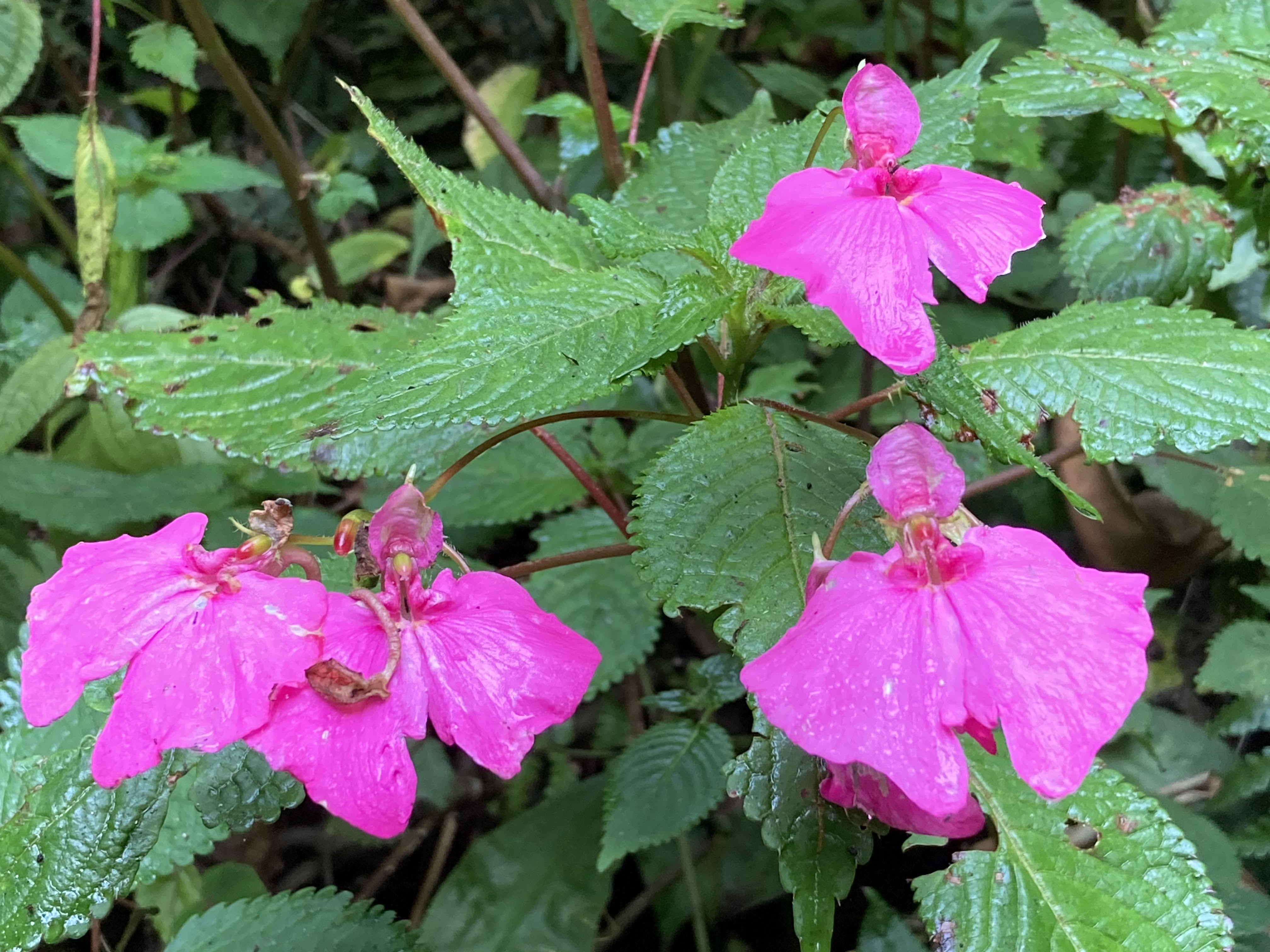
Figure 4.  Flowers of several species of touch-me-not plants add bright colors to the forest interior. 


Figure 5.  Fallen flowers and leaves on the forest floor provide keys to what is happening above in the tree canopy.


Figure 6.  This old forest road was formerly the main truck route from the Kenya and Tanzania coast across Rwanda and into the Democratic Republic of the Congo. The road is now being re-purposed as a biking trail for park visitors. 


Figure 7.  The park has many open areas caused by landslides on the steep terrain and by the past practice of villagers burning the forest to help find wild honeybee hives.


Figure 8.  Outside the park boundaries, large areas of forest have been replaced by tea plantations, owned by the village cooperatives. 


Monday, August 21, 2023

Rwanda Part I: Kigali and Traveling

 By Richard B. Primack

“Just in proportion to the outward poverty is the inward wealth.” Henry David Thoreau in his Journal.

Abe Miller-Rushing and I recently traveled to Rwanda for the International Conference on Conservation Biology. We had little idea heading into the trip about what traveling around the country would really be like. What we did know, was that Rwanda is a small, densely-populated, land-locked country in central Africa that had experienced horrific genocide in 1994. 

On our first day in Kigali, we visited the Grey-Crowned Crane rehabilitation project at Umusambi Village where captive cranes are being released back into the wild. It was a well-organized facility with knowledgeable guides and modern signage. 


Figure 1. Abe with a park guide (on the left) and Prudence Ndabasanze, a Rwandan conservation biologist (on the right).


Kigali has a large traditional market which, while old, dusty and dark, functions quite effectively. On the whole, Kigali is a safe and well-run city. 


Figure 2. The Kigali market.


From Kigali, we traveled southwest for three hours in a rental car to Huye/Butare, where I visited the University of Rwanda. I presented a talk on how botanical gardens and museums can contribute to climate change research. I met with Beth Kaplin, an American professor who works at the university, graduate student Sandrine Uwase, and many of the highly motivated faculty and graduate students.


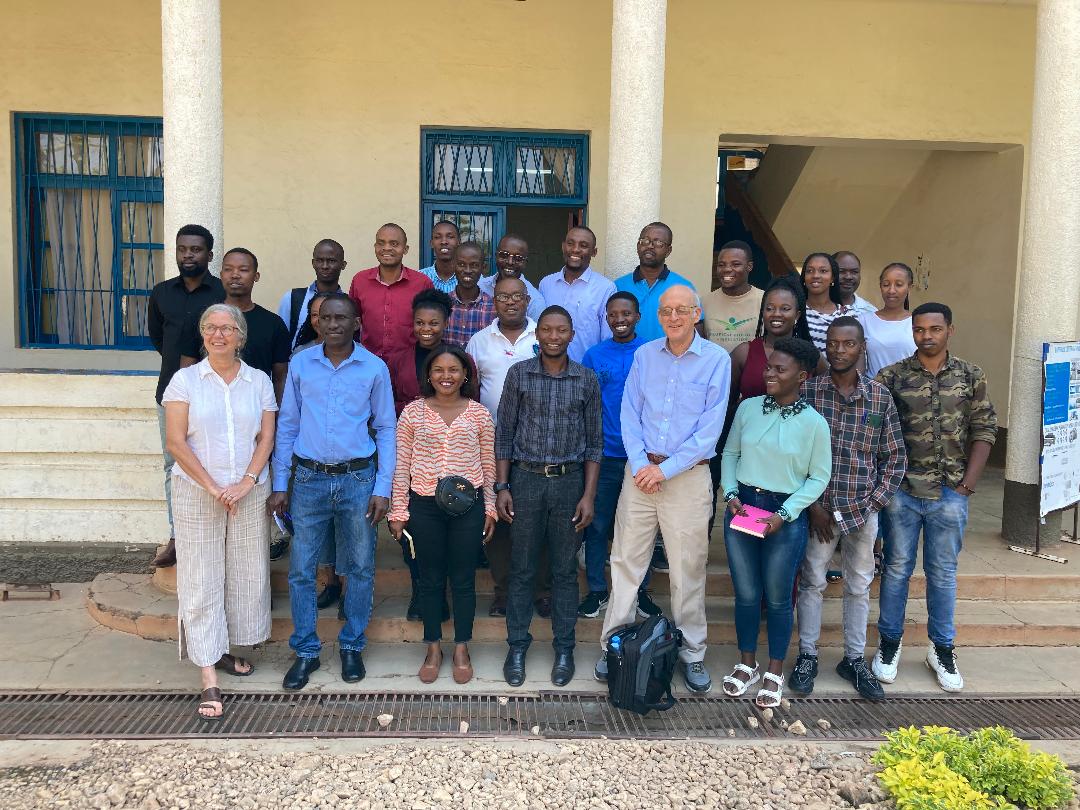
Figure 3. At the University of Rwanda.


The hilly Rwandan countryside is densely settled with most of the land cleared for subsistence cultivation of crops. Rice is grown in valleys, and beans and other crops on the hills. The number of people walking around the towns and villages, and on the road, is quite striking. The country really does have a high density of people. 


Figure 4. The densely cultivated hilly countryside of Rwanda.


After three more hours driving to the west, we arrived at Nyungwe National Park. At our lodge in the evening, the local villagers presented us with a cultural show of drumming and dancing. At their invitation, we joined the dancing. 


Figure 5. Traditional drumming at our lodge.


Figure 6. Traditional dancing at our lodge.  


Monday, August 14, 2023

A Walk through the Greenway

 By Selby Vaughn


“How much of beauty – of color, as well as form – on which our eyes daily rest goes unperceived by us?” Henry David Thoreau in his Journal.


This past summer, I had the opportunity to complete an internship in horticulture with the Rose Kennedy Greenway Conservancy in Boston. I learned a lot about native and nonnative plants, as well as urban park management.


Figure 1: The author posing with a bunch of lilies.


This past week, Professor Richard Primack visited the Greenway and we had a chance to walk through the park, exchange ideas with the horticulture team, and see all that the Greenway has to offer in terms of plants, public art, and community engagement.


Figure 2: Richard Primack poses with Lead Horticulturist, Julia Lloyd (left), and Ecological Healthcare Horticulturist, Valerie Stiles.


Figure 3: We learned from each other and observed pollinators throughout the park.

 During my internship, I have also been able to complete a pollinator monitoring project in the park to determine if honey bees seem to be outcompeting native pollinators. So far, honeybees seem to be greatly outnumbering native pollinators, especially in the more ornamental areas of the park.


Figure 4: A wildflower meadow planted on the Greenway includes habitats and other resources for native pollinators.


Figure 5: Honeybees are overly abundant in the park, and seem to be outcompeting native pollinators.


The Greenway is a wonderful example of sustainable horticulture, along with all that an urban park has to offer. I’ve learned a myriad of things working here this summer, and recommend visiting if you have the chance!


Figure 6: Maria Moleteni’s ‘Anti-monument’ is one of many interactive public art pieces throughout the park.


Figure 7: Professor Richard Primack and the author had a great time wandering the 17 acres of the Rose Kennedy Greenway.


Monday, August 7, 2023

Best Practices for Phenological Research

 By Richard B. Primack


I have lived some thirty years on this planet, and have yet to hear the first syllable of valuable or even earnest advice from my seniors. They have told me nothing, and probably cannot tell me anything to the purpose.” Henry David Thoreau in Walden.


The study of phenology, the seasonal timing of recurring life history events, is increasingly used to investigate the effects of climate change and other environmental changes on species and ecosystems. The field of phenology is rapidly expanding as new sources of data become available, such as digitized museum specimens, citizen science networks, historical data sets, and long-term weather records.

Figure 1. Japan has a wealth of historical and modern records of the timing of the cherry blossom festival.


We recently wrote a paper that aims to help researchers, especially those new to the field of phenology, understand what’s needed for effective phenological studies. We present ten best practices that can help researchers overcome common challenges and advance the study of phenology through better planning, data collection, analyses, and interpretation. These practices are appropriate whether researchers use existing data, collect new data, or combine new and past data. 


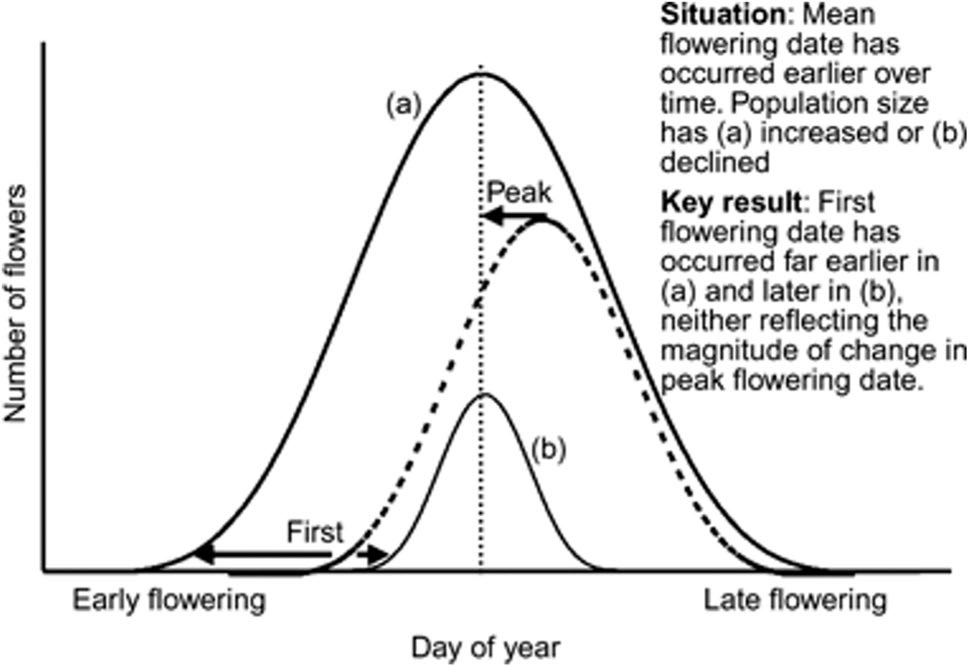
Figure 2. Changes in population size can have a strong effect on when the first migratory or flowering individual is detected in the spring.


Best practices:

1.     Ensure clear and consistent data collection protocols. 

2.     Be aware of data quality and biases. 

3.     Match data precision and duration to the question or application. 

4.     Utilize citizen science data and programs to maximize research benefits. 

5.     Avoid errors when combining or comparing disparate data sets. 

6.     Account for long-term changes in the study species. 

7.     Account for external factors that affect the study system. 

8.     Use statistics and models appropriate for the data and questions. 

9.     Ensure appropriate data are available when studying phenological mismatches. 

10.  Base new phenological theories on more comprehensive evidence. 


Here is a link to the full article: LINK


Monday, July 31, 2023

Overnight at the Moon

 By Richard B. Primack


“Truly the stars were given as a consolation to man.” Henry David Thoreau in Excursions.


The Moonrise Hotel in Saint Louis is unique in having a space-themed 1960s décor. People visiting nearby locations, including Washington University and the Saint Louis Zoo, might consider staying at this unusual hotel.  


Photo 1:  A moon replica emerges from the roof.


Photo 2:  The lobby stairs are illuminated in science fiction colors.


Photo 3. Giant photos of the moon enhance the lobby experience.


Photo 4.  Display cases feature scenes and objects from space exploration and popular culture.


Photo 5. Art objects inspired by science fiction, such as this futuristic radio, are encountered in the hallways.


Monday, July 24, 2023

Botanical Gardens More Beautiful with Glass Sculptures

 By Richard B. Primack


“To him who contemplates a trait of natural beauty no harm or disappointment can come.” Henry David Thoreau in Excursions.


The Missouri Botanic Garden has collaborated with artist Dale Chihuly since 2006 to enhance the beauty of its plantings with his glass sculptures. This special partnership is highly successful, delighting visitors and showing off glass sculptures and plants alike to great advantage. 


Photo 1.  A green tower draws attention to prairie plants.


Photo 2.  Red spears emerge from sand beds featured in a traditional Japanese garden. 


Photo 3.  A mass of orange curls highlights purple and red-hued plantings.


Photo 4.  Glass balls bring drama to a pond.